


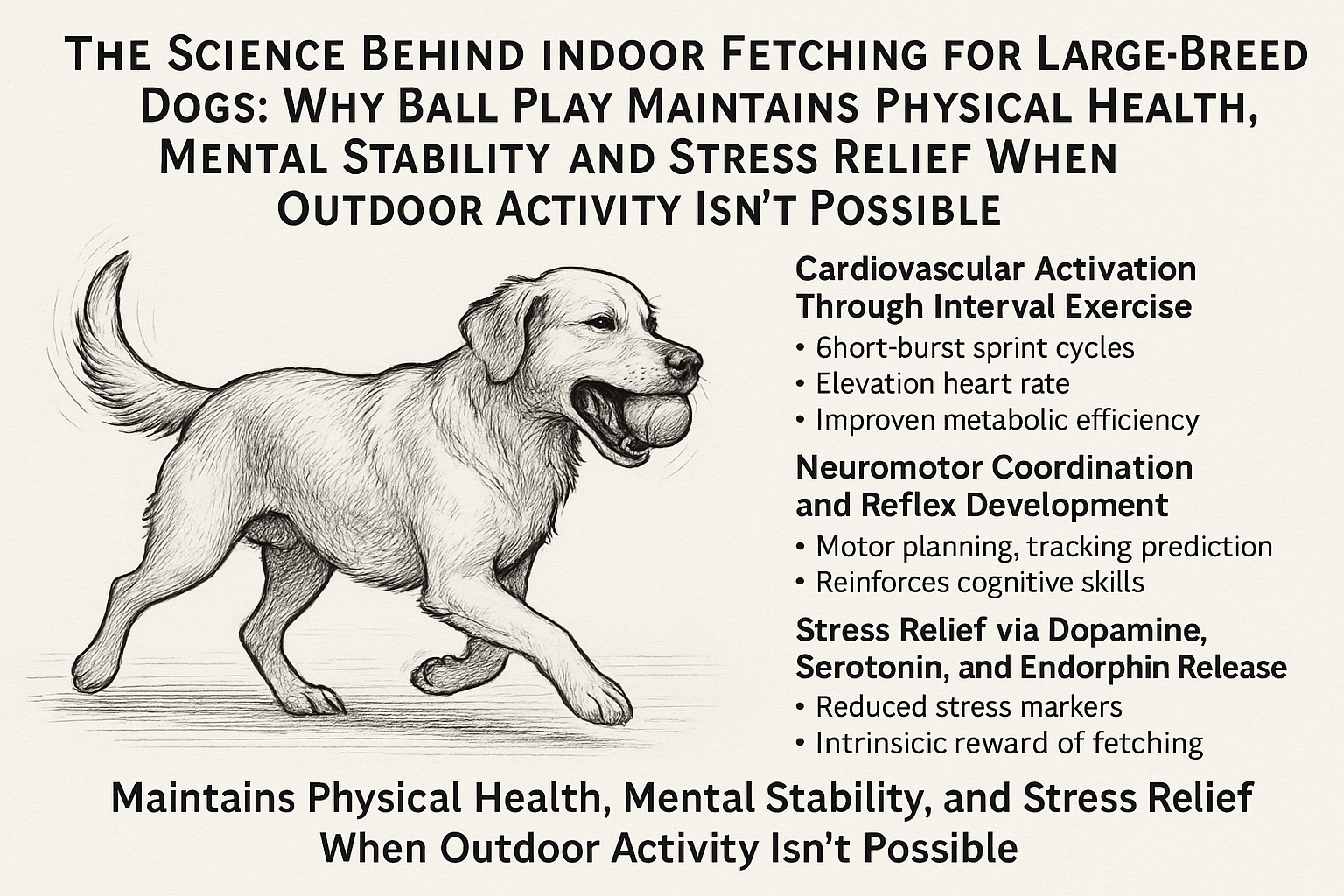
The Science Behind Indoor Fetching for Large-Breed Dogs: Why Ball Play Maintains Physical Health, Mental Stability, and Stress Relief When Outdoor Activity Isn’t Possible
The Science Behind Indoor Fetching for Large-Breed Dogs: Why Ball Play Maintains Physical Health, Mental Stability, and Stress Relief When Outdoor Activity Isn’t Possible
Large-breed dogs—such as Labradors, German Shepherds, Rottweilers, Great Danes, and other high-energy working or sporting lines—are biologically engineered for movement. Their musculoskeletal structure, cardiovascular capacity, and neurochemical reward systems all evolved around sustained physical and cognitive engagement. When weather conditions, space limitations, health concerns, or environmental restrictions make long outdoor walks difficult, many owners assume their dogs must inevitably miss out on meaningful exercise. In reality, indoor fetching, catching, and ball-based play can replicate many of the physiological and psychological benefits of outdoor activity.
Why Large Breeds Require Consistent, Purposeful Activity
Large-breed dogs have proportionately larger muscle mass and higher basal metabolic rates compared to small breeds. Their bodies are designed for compound movement patterns—running, sprinting, retrieving, gripping, carrying, and changing direction. Without regular activation of these systems, several problems can emerge:
- Muscle Atrophy and Joint Stiffness
Lack of motion reduces synovial fluid circulation within joints. Over time, this contributes to stiffness, reduced flexibility, and predisposition to degenerative diseases such as osteoarthritis. Even moderate indoor fetching stimulates joint movement enough to maintain lubrication and mobility. - Excess Cortisol and Behavioral Dysregulation
Physical exertion is a natural regulator of cortisol, the primary stress hormone. When dogs experience inadequate energy release, cortisol remains elevated, often manifesting as restlessness, barking, chewing, pacing, or anxiety-driven behaviors. Fast, repetitive actions like chasing a ball produce endorphins and dopamine that counteract cortisol. - Cognitive Under-Stimulation
Working-line breeds in particular need problem-solving tasks. Fetching and catching involve motor planning, target prediction, sensory tracking, and decision-making in milliseconds. Indoor ball play provides the cognitive stimulation they otherwise achieve through outdoor exploration.
How Indoor Fetch and Catch Replicate Outdoor Benefits
Although many owners think of ball play as a purely physical game, the science shows it activates multiple health systems simultaneously.
1. Cardiovascular Activation Through Interval Exercise
Indoor fetch creates short-burst sprint cycles, similar to interval training. These bursts increase heart rate, improve oxygen utilization, and strengthen cardiac muscles. Studies on canine exercise physiology confirm that even brief high-intensity play improves metabolic efficiency and helps regulate weight—critical for large breeds prone to obesity and joint load issues.
2. Neuromotor Coordination and Reflex Development
Tracking a moving object triggers visual-motor pathways in the brain. Dogs must calculate the ball’s trajectory, adjust stride frequency, reposition their body, and coordinate jaw closure upon catching. This continuous neuromotor refinement keeps the brain sharp and slows age-related cognitive decline.
3. Stress Relief via Dopamine, Serotonin, and Endorphin Release
Fetching is intrinsically rewarding because it taps into predatory motor patterns: orient → chase → grasp → carry. Completing these sequences releases dopamine, reinforcing the behavior and producing a measurable calming effect. Even five-minute indoor sessions can substantially reduce stress markers.
4. Strengthening Human–Dog Social Bonding
Interactive ball play deepens attachment by stimulating oxytocin release in both dog and handler. This hormone promotes cooperative behavior, focus, and emotional stability—especially important for large breeds that rely heavily on structured engagement with their humans.
Making Indoor Fetch Safe and Effective
For large dogs, safety and controlled intensity matter.
- Use lightweight, soft balls to prevent furniture damage and reduce risk of tooth injury.
- Limit jumping on hard floors; encourage horizontal chase instead of vertical leaps to protect joints.
- Incorporate training elements—sit, stay, release, drop—to blend obedience with exercise.
- Short, frequent sessions (3–4 sets of 5–7 minutes each) outperform one long session in preventing fatigue and overstimulation.
When Outdoor Walks Are Not Possible, Indoor Play Becomes Essential
Long walks provide steady aerobic exercise and sensory input. When they’re unavailable, structured indoor fetch helps compensate by offering:
- Elevated heart rate cycles
- Mental enrichment
- Controlled stress relief
- Predictable exercise routines
- Behavioral stability
Large-breed dogs rely on these systems to avoid frustration, weight gain, depressive symptoms, and destructive habits. Indoor play is not a luxury—it is a functional replacement for their unmet biological needs.
How Single-Ingredient Dehydrated Treats Enhance Exercise, Motivation, and Overall Health
During exercise or training-based games, reinforcement plays a crucial role in shaping behavior and sustaining motivation. Single-ingredient dehydrated treats provide several scientifically supported advantages.
1. High Palatability With Clean Nutrition
Dehydration intensifies the natural flavor and aroma of proteins such as chicken, fish, beef, or organ meats. This heightened palatability increases focus and willingness to participate in exercise tasks without relying on fillers, artificial additives, or sugars.
2. Superior Digestibility and Reduced Allergen Load
Because these treats contain only one ingredient, the dog’s digestive system processes them more efficiently. Dogs with food sensitivities or gastrointestinal issues often tolerate single-protein treats far better than mixed-ingredient commercial snacks.
3. Stable Energy Support During Activity
Protein-rich dehydrated treats provide amino acids that help maintain muscle function and repair. They prevent mid-exercise fatigue and keep the dog eager and responsive throughout play sessions.
4. Positive Reinforcement and Behavior Shaping
During fetch, catch, or tug transitions, treats act as markers for correct responses. This accelerates learning, increases engagement, and reinforces calm behaviors like returning the ball or releasing it on command.
5. Psychological Satisfaction
Chewing and receiving high-value treats stimulate dopamine pathways, creating emotional satisfaction that pairs positively with exercise. Dogs associate ball play with reward, making them enthusiastic and mentally ready for each session.
Final Perspective
Indoor fetch and ball play are not mere substitutes for outdoor exercise; they are fully functional enrichment tools backed by canine physiology and behavioral science. For large-breed dogs, they maintain muscle health, balance stress hormones, support cognitive function, and sustain emotional well-being. Coupled with clean, single-ingredient dehydrated treats for reinforcement, these sessions become powerful systems for keeping a dog healthy, motivated, and mentally stable—even when outdoor activity is limited.