


Operational Blueprint for Ethical Commercial Dog Breeding and Puppy Welfare
Humane, responsible commercial dog breeding requires prioritizing animal health, genetics, welfare, and transparent business practices. A profitable, ethical program minimizes health risks to dams (bitches) and offspring, limits reproductive frequency, enforces rigorous screening and husbandry, documents outcomes, and builds veterinary partnerships. Below is a science-based operational blueprint: biology, limits on breeding frequency, pre-breeding screening, peripartum care, neonatal protocols, genetic management, housing and husbandry, legal/ethical obligations, business controls and welfare KPIs.
- Reproductive biology — practical points for breeding management
- Canine estrous: anestrus → proestrus → estrus → diestrus. Optimal conception timing correlates with the LH surge/ovulation: breeding generally occurs when serum progesterone rises (usually 2–5 days after LH surge), with most successful matings between ovulation and 4–6 days thereafter. Progesterone monitoring (serial testing) or vaginal cytology + progesterone is standard to time mating or artificial insemination (AI).
- Gestation: ~63 days from ovulation (range 58–68 days). Fetal viability and parturition timing hinge on accurate breeding date or progesterone-based ovulation timing.
- Lactation/uterine involution: full physical recovery takes weeks; metabolic load during lactation is high.
- How many times a bitch can be pregnant (evidence-based, humane limits)
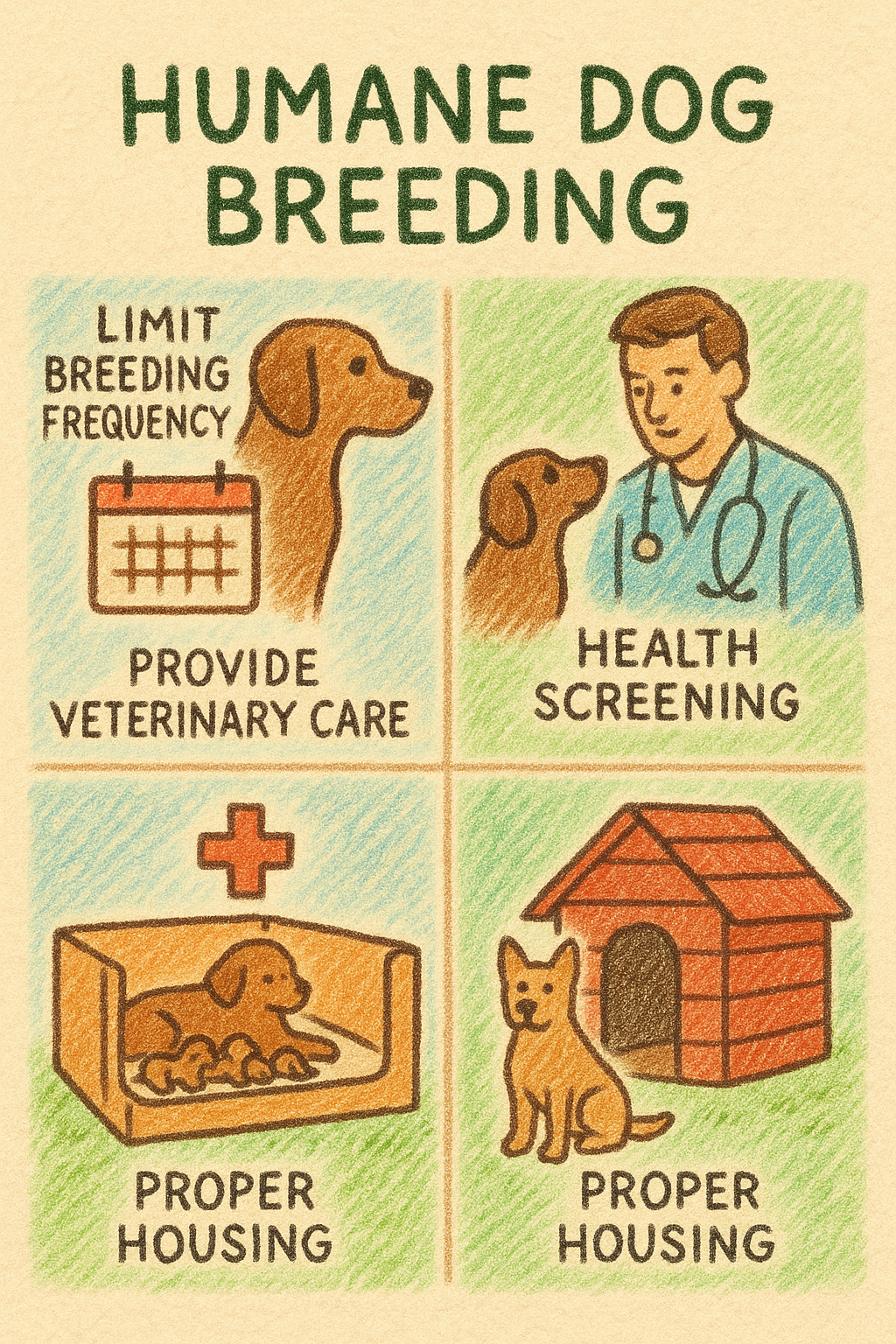
- Recommended maximum cadence: no more than one litter per 12 months and preferably skip at least one estrous cycle between litters. This allows physiologic recovery of body condition, uterine involution and reduction of cumulative obstetric risk.
- Lifetime limits: common best practice is to cease routine breeding after 4 litters or by age 6–7 years, whichever comes first, unless a bitch is individually assessed and cleared by a reproductive veterinarian. Exceptions may be justified only after exhaustive clinical evaluation.
- Rationale: repeated pregnancies at short intervals increase risks of poor body condition, lactational failure, mastitis, uterine disease (endometritis), and anesthetic/obstetric complications. Older dams have progressively higher dystocia and neonatal mortality rates.
- Pre-breeding health screening (must be mandatory)
- Full physical exam and reproductive history documented. Baseline CBC, biochemistry, and urinalysis to detect systemic disease.
- Infectious disease screening: Brucella canis serology/PCR in regions where relevant (positive animals must not be bred and should be managed per public-health rules). Test for leptospirosis, canine herpesvirus (where relevant), and other local pathogens.
- Parasite control: fecal flotation, treat intestinal parasites prior to breeding; implement ectoparasite control safe in pregnancy.
- Vaccination: ensure core vaccines are current and administered with appropriate timing before breeding (vaccine timing per veterinarian; some vaccines should be given at least 2–4 weeks pre-breeding to maximize maternal antibody transfer). Rabies per local law.
- Reproductive assessment: vaginoscopy/ultrasound as indicated; for older dams, uterine ultrasound or cytology to check for disease.
- Genetic and conformation screening: breed-specific genetic tests for inherited disorders (e.g., progressive retinal atrophy mutations, von Willebrand’s disease, etc.), hip/elbow scoring (PennHIP/OFA), cardiac auscultation ± echocardiography for breeds with disease predisposition, eye exams by a boarded ophthalmologist. Only breed clinically sound animals.
- Nutritional assessment and body condition scoring; correct deficits before breeding.
- Genetic management and selection strategy
- Maintain accurate pedigrees and calculate coefficient of inbreeding (COI); aim to minimize inbreeding and avoid mating close relatives unless for defined, justified genetic goals with mitigation plans. Target COI levels consistent with breed-club guidance.
- Use health-tested, performance/temperament-evaluated studs; prefer proven sires with clearances. Incorporate outcrossing strategies when appropriate to reduce prevalence of recessive disorders.
- Keep records of offspring health outcomes to inform future selection.
- Breeding methods, timing and assisted reproduction
- Natural mating is acceptable if safe and both animals are healthy. Use progesterone assays to time natural mating.
- AI (fresh, chilled, frozen): follow veterinary-guided timing—frozen semen often requires insemination 48–72 hours after ovulation plus careful monitoring. Cryopreserved breeding introduces additional welfare and biosecurity considerations.
- Limit interventions to medically justified procedures performed by trained personnel. Avoid elective cesarean sections unless medically indicated (e.g., brachycephalic breeds with known dystocia risk).
- Peripartum and whelping care (standards to avoid suffering)
- Provide a quiet, clean, temperature-controlled whelping area with adequate space, non-slip flooring and nesting materials. Record ambient temperature and adjust neonatal heating as needed.
- Veterinary plan in place: on-call reproductive veterinarian, clear transport route to clinic, emergency kit and oxytocin/antibiotics only under veterinary oversight.
- Monitor labor progression: allow 4–6 hours between strong contractions and delivery? (clinical thresholds vary; consult veterinarian). Signs of dystocia warrant immediate veterinary intervention.
- Avoid unnecessary restraint or stress during labor; minimize handling by untrained personnel.
- Neonatal care and early socialization (critical welfare practices)
- Ensure colostrum within first 12–24 hours; measure passive transfer if feasible. Provide supplemental colostrum or plasma in failure of transfer.
- Maintain thermoneutral environment for neonates; weigh pups daily for first two weeks to confirm growth trajectories.
- Establish protocols for orphaned or weak neonate warming, tube feeding, or assisted suckling. Use sterile techniques for any invasive intervention.
- Early neurological stimulation and structured socialization per evidence-based programs; but avoid overstimulation in the first weeks. Begin supervised socialization at appropriate ages and ensure vaccination schedule followed.
- Nutrition and body condition management
- Transition to a high-quality, energy-dense diet formulated for gestation/lactation; increase caloric density in the last third of gestation and during lactation (often up to 2–3x maintenance). Provide free access to water.
- Monitor weight and body condition score; avoid obesity pre-breeding and excessive weight loss during nursing.
- Husbandry, housing and enrichment for humane operations
- Grouping: avoid overcrowding; keep compatible social groups. Provide enrichment (toys, positive human interaction), regular exercise, and rest.
- Hygiene: rigorous sanitation to control infectious disease; isolate sick animals; ensure quarantine protocols for new arrivals.
- Staff training: handlers must be trained in canine behavior, whelping observation, neonate care and emergency recognition. Maintain staff-to-dog ratios that ensure individualized care.
- Record keeping, traceability and biosecurity
- Maintain detailed records per animal: pedigree, medical history, breeding dates, ovulation timing, whelping notes, puppy weights, vaccinations, deworming, sales, buyer contracts, and microchip numbers.
- Biosecurity: controlled access, pest control, footwear/change protocols, and cleaning/disinfection routines.
- Legal, ethical and buyer-education responsibilities
- Comply with local animal welfare laws, licensing, anti-cruelty statutes, and kennel registration rules.
- Provide transparent buyer contracts: health guarantees, spay/neuter clauses, return policies, disclosure of congenital issues and clear rehoming commitments if owners relinquish animals.
- Screen buyers to reduce risk of impulse purchases and ensure suitable home environments.
- Business KPIs and quality metrics (monitor continuously)
- Track: neonatal mortality, weaning weights, percentage of dams with complications, incidence of genetic disorders among offspring, veterinary intervention rates, buyer return rate, average inter-litter interval, and compliance with health testing. Set benchmarks and aim for continuous improvement.
- Ethical constraints and alternatives
- Do not breed bitches with hereditary disease, poor temperament, or chronic health issues. Do not use females solely for income without ensuring welfare. Prefer spay/neuter for non-breeding animals and support rehoming programs. Consider limiting commercial scale; smaller, high-welfare operations are preferable to high-volume puppy mills.
- Practical checklist (minimum standards before any mating)
- Up-to-date vaccinations and parasite control; Brucella negative.
- Passed breed-specific genetic and orthopedic screenings.
- Body condition score within ideal range.
- Owner / facility consent, buyer/placement plan documented.
- Veterinary partner and emergency protocol confirmed.
- Whelping area prepared and neonatal supplies on hand.
Conclusion
A humane, sustainable breeding business is not high volume—it is data-driven, veterinary-led, genetics-informed and welfare-focused. Limit a bitch’s reproductive frequency (one litter per 12 months, conservative lifetime limits), conduct comprehensive health testing, provide peripartum and neonatal veterinary care, and maintain transparency with buyers. Prioritize long-term animal welfare over short-term profit; that is both ethical and the foundation of a reputable, resilient breeding enterprise.