

Kibble vs. Raw, Dehydrated, and Home‑Cooked Dog Food: A Scientific Comparison
Kibble vs. Raw, Dehydrated, and Home‑Cooked Dog Food: A Scientific Comparison
Introduction
Pet owners today face a complex landscape when choosing the right diet for their dogs. The four most common options—kibble, raw diets, dehydrated food, and home‑cooked meals—each come with distinct nutritional, safety, and regulatory considerations. While kibble remains the most widely available, growing evidence suggests that raw and dehydrated diets may provide superior health benefits when properly formulated. This article explores the science behind each option, tending to highlight why raw and dehydrated food stand out, while also considering legal and practical aspects.
Kibble: Convenience with Nutritional Trade‑Offs
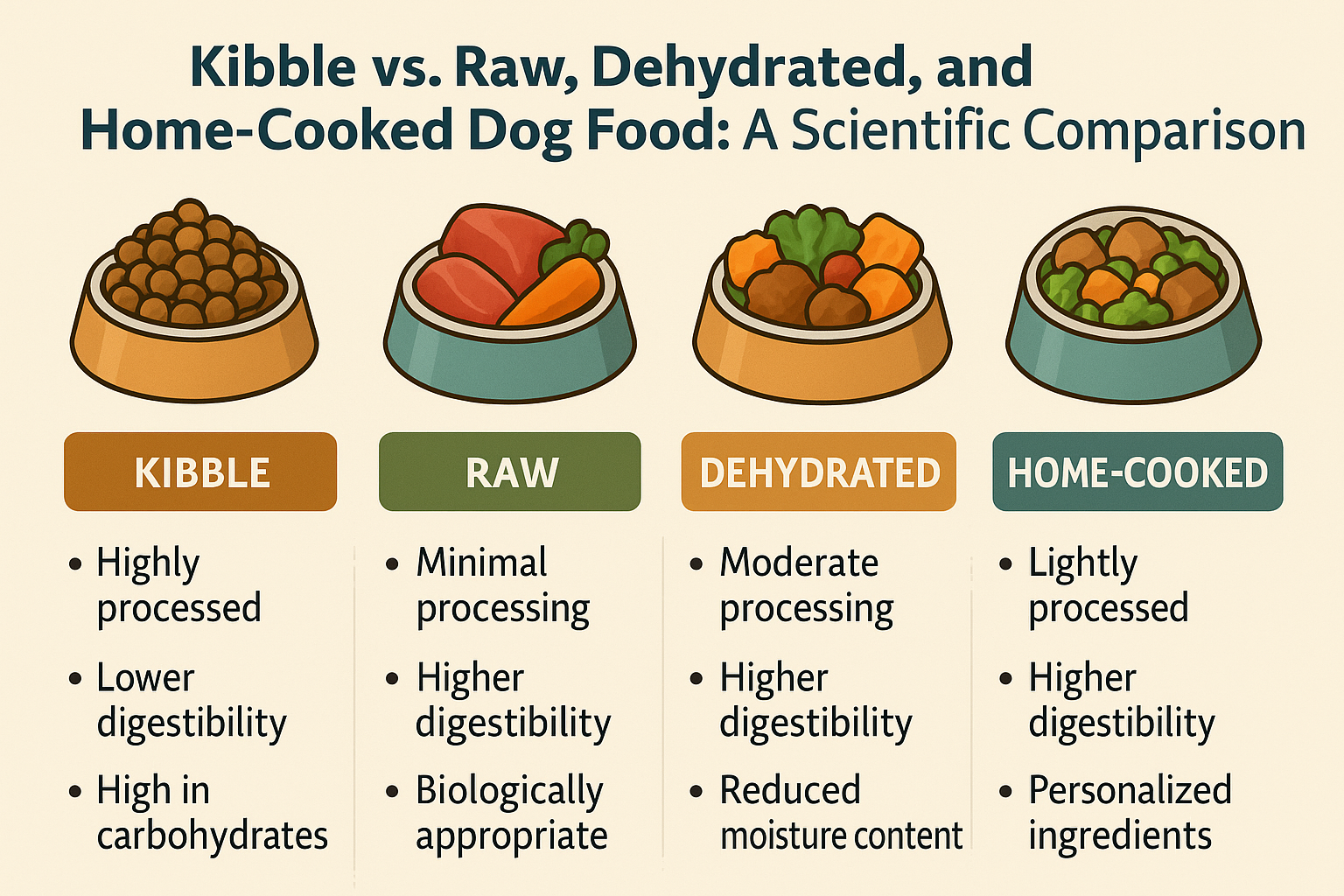
Kibble is produced through extrusion, a high‑heat process that denatures proteins and reduces natural vitamin content. Although kibble is convenient and shelf‑stable, it often contains high levels of carbohydrates—sometimes exceeding 40%—and relies on fillers and synthetic additives to meet minimum nutritional standards. Research has linked long‑term kibble feeding to obesity, dental plaque accumulation, and digestive issues in some dogs.
From a regulatory perspective, kibble is tightly controlled. In the United States, it falls under the Federal Food, Drug, and Cosmetic Act (FFDCA), with oversight by the FDA’s Center for Veterinary Medicine. In India, the Food Safety and Standards Authority of India (FSSAI) governs labeling and imports. These frameworks ensure safety but do not necessarily guarantee optimal nutrition.
Raw Diets: Biologically Appropriate Nutrition
Raw diets typically include uncooked meat, organs, bones, and sometimes vegetables. Advocates argue that raw feeding aligns with canine evolutionary biology, offering higher protein bioavailability and amino acid retention compared to kibble. Veterinary studies have reported improvements in dental health, coat quality, and stool consistency among dogs fed raw diets.
The main challenge lies in pathogen risk. Raw meat can harbor Salmonella or E. coli, which poses risks to both pets and humans. However, strict hygiene practices and responsible sourcing can mitigate these concerns. In the European Union, raw pet food is regulated under Regulation (EC) No 1069/2009 and Regulation (EC) No 142/2011, requiring pathogen control measures. In the U.S., raw diets must comply with USDA inspection standards and FDA safety rules.
Despite these challenges, raw diets remain nutritionally dense and biologically appropriate. When responsibly sourced, they provide a level of freshness and nutrient integrity that kibble cannot match.
Dehydrated Food: Nutrient Preservation with Safety
Dehydrated dog food represents a middle ground between raw and kibble. Produced by removing moisture at low temperatures, dehydration preserves nutrients while extending shelf life. Unlike kibble, dehydrated food retains more vitamins and enzymes, making it easier to digest and closer to fresh food in nutritional profile.
One of the key advantages is safety. Dehydration reduces pathogen risk compared to raw feeding, while still maintaining much of the nutritional integrity. Rehydration before serving mimics the texture of fresh food, improving palatability. Regulatory oversight is similar to kibble, with FDA and AAFCO guidelines in the U.S. and FSSAI requirements in India.
For owners seeking a balance between convenience and nutrition, dehydrated food offers a compelling option. It avoids the heavy carbohydrate load of kibble while minimizing the pathogen risks associated with raw diets.
Home‑Cooked Meals: Personalization with Pitfalls
Home‑cooked diets appeal to owners who want full control over ingredients. They can be highly palatable and allow customization for dogs with allergies or sensitivities. However, scientific studies show that more than 60% of home‑cooked diets are nutritionally imbalanced, often deficient in calcium, zinc, and essential fatty acids. Without veterinary guidance, these deficiencies can lead to long‑term health issues.
Unlike commercial diets, home‑cooked meals are not subject to regulatory oversight. This places the burden of nutritional adequacy entirely on the owner. While appealing in theory, home‑cooked diets require significant time, expertise, and supplementation to ensure balance.
Conclusion: Why Raw and Dehydrated Lead the Pack
While kibble dominates the market due to convenience and regulation, its nutritional compromises are well documented. Home‑cooked meals, though customizable, often lack balance unless formulated by veterinary nutritionists. In contrast, raw and dehydrated diets stand out as scientifically superior options. Raw food, when responsibly sourced, offers unmatched protein bioavailability and aligns with canine physiology. Dehydrated food provides a safer, shelf‑stable alternative that retains much of raw’s nutritional integrity.
For pet owners seeking both scientific credibility and practical feeding solutions, raw and dehydrated diets represent the most promising paths toward canine health.